04 Mar 2026

Automatic vs manual burger patty machines: features, differences and benefits

Automatic or manual burger machines: everything you need to know to choose the best solution for your business

Automatic vs manual burger patty machines: features, differences and benefits
Would you like more information?

Contact us to schedule an appointment with our experts

Contact us

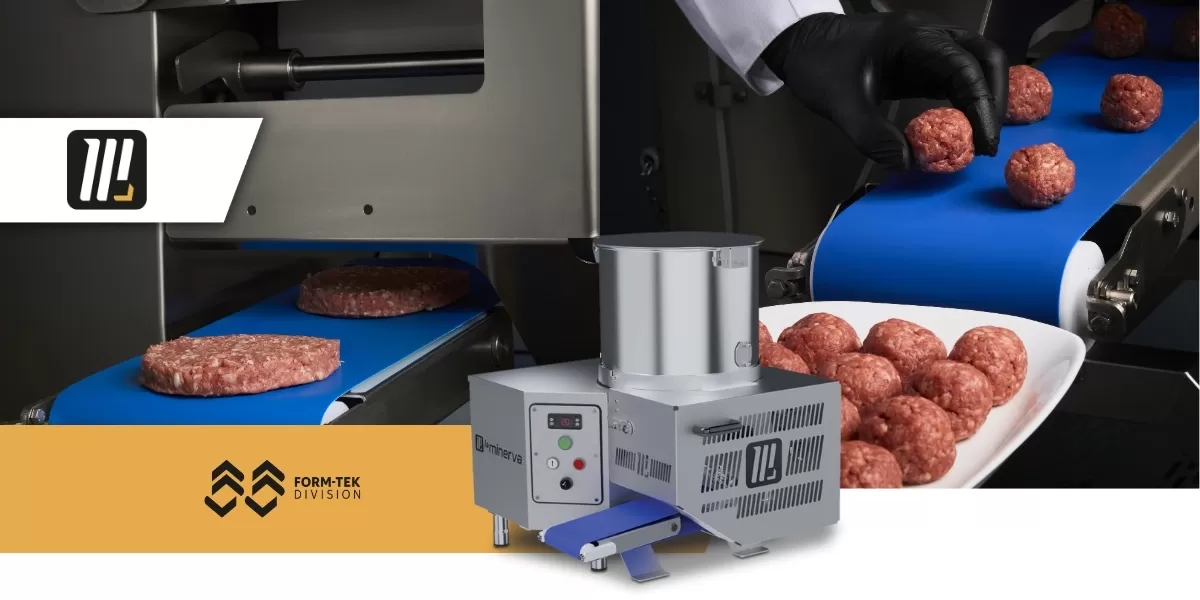
In the meat processing and food processing sector quality of the finished product, productivity and compliance with hygiene and health standards are essential aspects. Professional burger patty machines, designed to form burgers from meat, fish or plant-based alternatives, allow to obtain uniform portions in weight, shape, and texture, while ensuring operational efficiency and cost control. For food labs, small or medium-sized food industries and catering kitchens, using a suitable hamburger maker is essential to speed up the production process, reduce waste and ensure consistent quality standards. 


The choice between a manual and an automatic burger machine is therefore not just a matter of budget but a strategic investment for activities wishing to ensure high quality of the final product and effectively meet market demands. Choosing the right equipment requires evaluating several factors, such as production volumes, product type, frequency of use, available space, ease of cleaning, and compliance with hygiene regulations, as well as many other aspects. 


Let's better understand the characteristics of automatic and manual burger machines in terms of operation, performance, and areas of use, in order to compare them and to select the solution best suited to each production need.


Manual burger machine: functioning and operating limits

Manual burger patty machines are relatively simple tools: the operator inserts the minced meat into a mold, exerts mechanical pressure through a lever or piston and produces a hamburger of more or less regular shape. These machines require direct and continuous intervention for each piece produced, which imposes a slow work rate and is highly dependent on the manual skill and attention of the user.


The main limitation of manual models lies in product variability: even for an experienced operator, it is difficult to achieve exactly the same weight and thickness on every single burger. This results in less uniformity of the finished product, which can have direct repercussions on the presentation, cooking times and qualitative perception on the part of the end customer. In activities working with high volumes - such as structured butcher shops, food processing labs or large-scale retailers - the manual burger machine is unable to guarantee a high production volume and, consequently, the cost of labour disproportionately affects the unit cost of the product.

Automatic burger machine: productivity, uniformity and total process control

professional automatic forming machine radically transforms the production process. Thanks to an automatic system that autonomously manages the portioning of the dough, the shaping pressure and the extraction of the finished product, it allows the production of hundreds of burgers per hour with a precision that no manual operator could consistently replicate over time.


The most obvious advantage is the perfect uniformity of each piece: diameter, thickness and weight are customizable and remain constant throughout the entire production cycle. For example, the top meat forming machines in Minerva Omega Group’s Formtech Division allow the production of hamburgers up to 135 mm in diameter, with adjustable thickness up to 30 mm, adapting easily to specific production requirements and target markets. This flexibility is particularly important for retail and high-volume professional kitchens, where product standardization is a game changing factor.

Automatic vs manual burger patty machines: features, differences and benefits

Another advantage of automatic hamburger machines is the reduction of waste. Thanks to the precise portioning, the dough is used optimally, limiting waste due to off-weight or irregularly shaped pieces. Over time, this leads to tangible savings in raw material costs. Combined with reduced labor costs (since a single operator is sufficient to manage the production cycle), investing in an automatic burger machine pays for itself much faster than you might imagine, often within a single year of use.

Construction technology: motor, speed variator and scraping wire

Commercial automatic burger machines are distinguished by specific technical characteristics and construction technologies that significantly improve their performance compared to manual models. In particular, the new-generation engine in the Minerva Omega Group models allows for easy processing of even the hardest and most compact doughs. Our machines can operate continuously without overheating problems, ensuring maximum efficiency even in production contexts where work rates are particularly intense. 


The integrated speed variator, available on some models, works synergistically with the motor, allowing the same torque to be maintained at different speeds and with doughs of varying consistency: whether it is a soft or very compact mince, the machine always ensures the same production efficiency, without compromising the quality or uniformity of the product. 

Automatic vs manual burger patty machines: features, differences and benefits


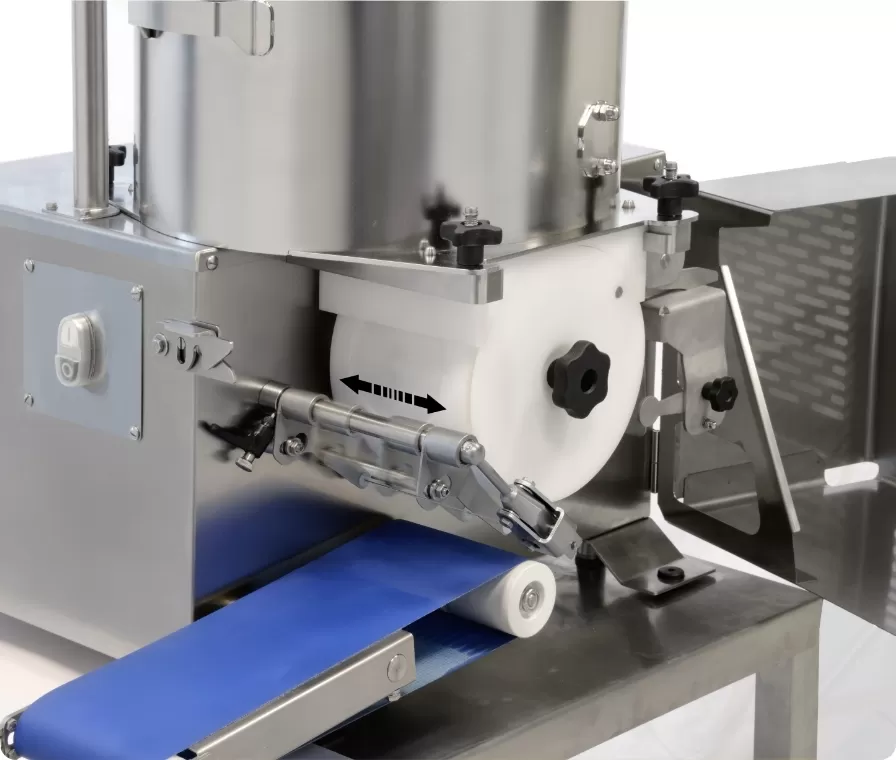
The solution adopted for the scraper wire - the component that separates the product formed from the mould - is particularly innovative. Unlike systems that require auxiliary motors or the use of compressed air (with all that this entails in terms of additional systems, running costs and installation complexity) some of Minerva Omega Group’s automatic burger patty machines involve the movement of the scraper wire directly connected to the main motor. This ensures perfect synchronization with the machine's rotation speed under all operating conditions. 

Additional advantages of automatic burger patty machines: complete hygiene and ease of cleaning

In any professional food production context, ease of cleaning and compliance with hygiene standards are essential aspects. Thanks to their advanced construction features, Minerva Omega Group automatic burger patty machines ensure faster and safer sanitization operations.


Raised feet allow easy access to the bottom of the machine without the need to move it. The door is fully removable and, in most models, made of stainless steel: unlike plastic components, which tend to become opaque over time and retain organic residues in surface micro-scratches, stainless steel maintains its aesthetic properties unchanged and, above all, is less prone to breakage during daily sanitization operations. 


The polyzene block is completely removable, allowing for thorough cleaning in the heart of the machine, i.e. in the actual forming area. The loading basin is entirely removable and washable in industrial washing machines. There are no blind or hard-to-reach areas: all surfaces in contact with the product are fully accessible and sanitizable. Dismantling takes place without the use of tools, reducing the time dedicated to end-of-shift operations and simplifying the work of operators.

Production flexibility: from meat to fish, up to integrated lines

An often overlooked aspect of choosing a professional burger maker is its application versatility. Automatic models are not exclusively dedicated to the production of meat burgers: thanks to the ability to quickly change molds and handle doughs of different textures and compositions, the same machine can be used to form meatballs, fish-based preparations, vegetable croquettes, nuggets and any other portioned shapes required for production.


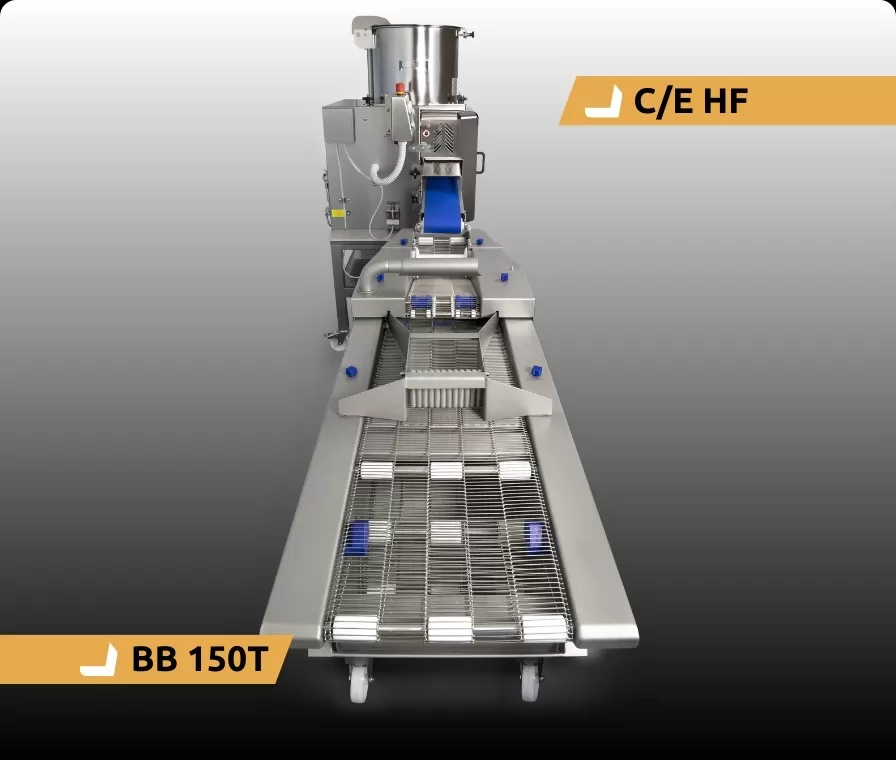
The mould change is quick and does not require specific technical skills, which makes automatic hamburger machines suitable for diversified production settings where the menu changes frequently or where you want to expand the range of products offered. Minerva Omega Group models are also designed to be compatible with batter-breading lines and meatball forming machines, offering the possibility of setting up an integrated production line, from dough to finished batter-breaded product, with machines that are fully aligned in terms of size, work rate and production flow. This compatibility is particularly useful for food processing workshops and large-scale catering kitchens, where the efficiency of the production flow is as fundamental as the quality of the product.

Automatic vs manual burger patty machines: features, differences and benefits

Automatic vs. manual burger patty makers: why automation is the right choice and how to choose the best model

In professional settings, a manual burger patty maker often represents the first step towards a better organized production than fully artisanal forming. In fact, it allows the product to be standardized by introducing greater precision in forming and better organization of the workbench. In butcher shops, delicatessens and small labs, this type of machine makes it possible to speed up daily preparations, maintaining direct control by the operator and adapting well to contained or non-continuous production.


However, as product demand increases, the assortment expands and staff have to manage multiple processes simultaneously, the operational limitation of manual solutions becomes evident. Under these conditions, investing in an automatic burger patty maker becomes essential to the growth of the business. Automation allows for a faster and more structured production process, reducing operator workload and enabling more efficient management of internal resources.


The choice of the most suitable model must be based on several key factors: the expected daily production volume, the variety of formats and doughs you intend to process, whether or not the dough needs to be refrigerated during processing, the availability of space, and specific cleaning and maintenance needs. Evaluating these aspects carefully before purchasing allows you to choose a machine that truly meets your operational needs, avoiding the risk of undersizing the equipment or investing in unnecessary features.

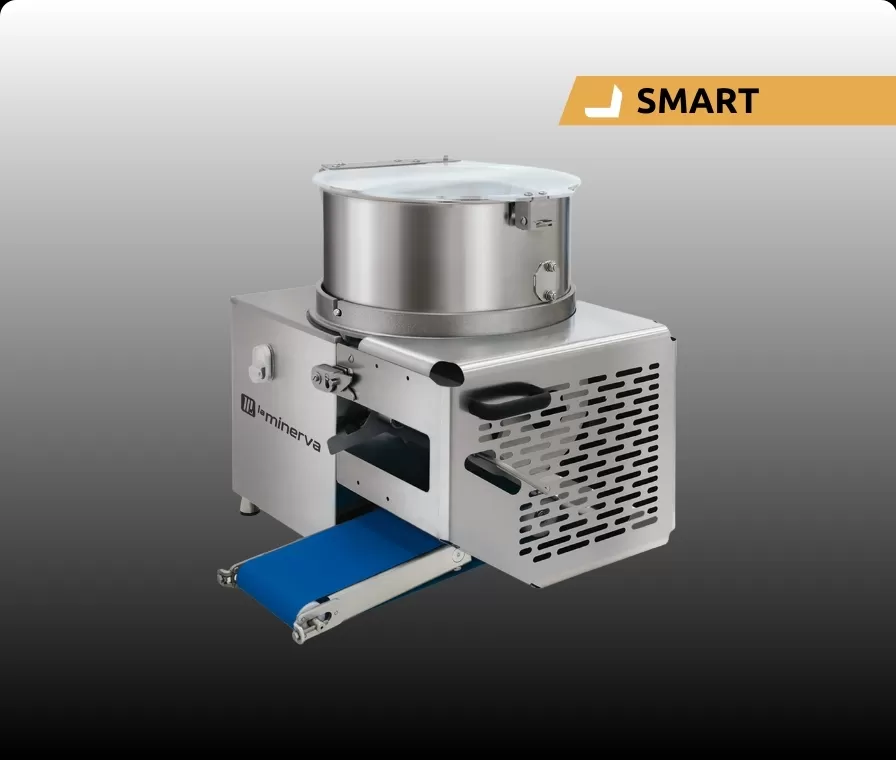
Minerva Omega Group offers a complete range of burger maker machines designed to combine artisanal quality and technological innovation. All machines are made in stainless steel, easy to disassemble and clean, and they have built-in protective devices as well as a high-precision forming system that ensures consistent results and uniform shapes. The result is faster, more diversified and accurate daily production, capable of raising product quality and satisfaction for the end customer.


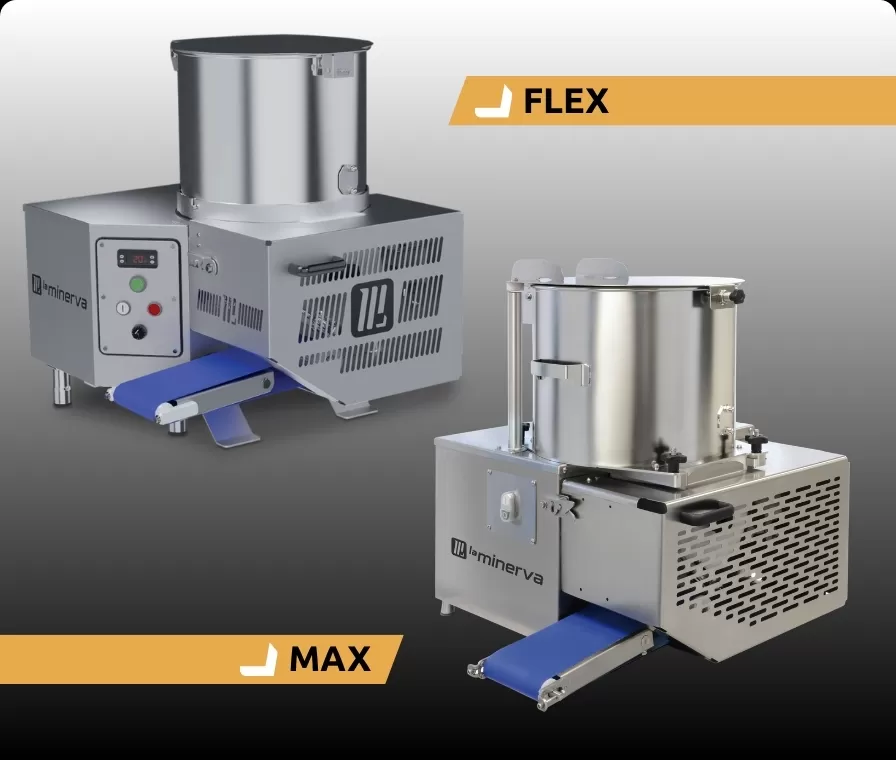
Among the top models in the range, the MAX burger machine is the ideal solution for those who require high production capacity and maximum operational flexibility. With 0.75 kW of power and a fully removable 40-litre tank, it produces burgers up to 135 mm in diameter with adjustable thickness up to 30 mm, and is engineered to handle high production volumes. The quick-coupling paddle is compatible with all cylinder types, while the electrically operated wire cleaning system eliminates the need for compressed air. The stainless steel structure, featuring a removable door and lid, simplifies daily sanitization. 

Automatic vs manual burger patty machines: features, differences and benefits

The FLEX burger machine (available from May 2026) is the ideal choice for those seeking an optimal balance between performance and versatility. Designed in five different versions - from the basic configuration with manual wire cleaning to the more advanced variants with automatic cleaning, speed variator and refrigeration - it offers a power of 1.20 kW and a removable 30-litre tank. It can form burgers up to 130 mm in diameter and up to 30 mm thick. The stainless steel, Delrin® and aluminum structure ensures robustness and ease of cleaning. The modularity of the FLEX range allows you to choose the configuration that best suits your needs: from the entry-level version for those taking their first steps in automation, up to the top models with refrigeration and speed variator for those working on high volumes and doughs of different consistencies.

Automatic vs manual burger patty machines: features, differences and benefits

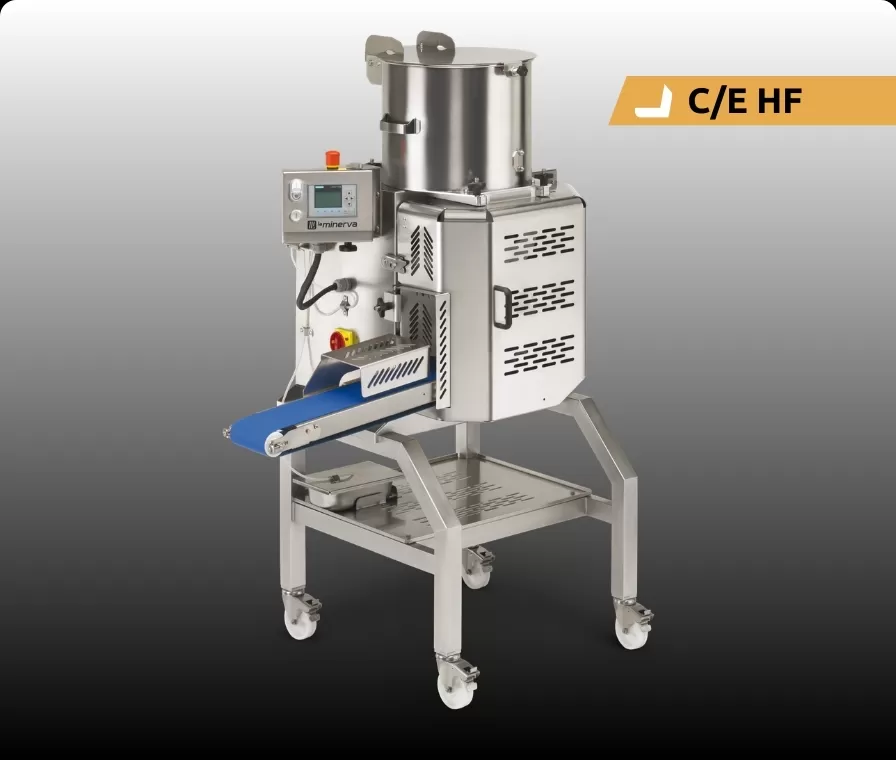
Minerva Omega Group also offers solutions designed for those who require greater production versatility, such as the C/E HF automatic burger/meatball machine, which allows for multiple processes to be carried out with a single machine. The C/E HF is in fact ideal not only for the production of burgers and meatballs, but also for the automatic stacking of burgers, ensuring product uniformity and operational continuity. Thanks to a quick and intuitive reconfiguration system, the transition from hamburger to meatball production (and vice versa) takes just minutes, without long machine stops. This feature allows you to optimize both the available space and the organization of work, avoiding the use of two separate machines. The C/E HF is therefore the perfect solution for butchers, delicatessens and professional workshops that operate in small spaces but require flexibility, efficiency and high quality standards.


Do you want to receive more information about the available models or request a personalized consultation?