30 Jun 2026

Commercial ice makers: a complete buying guide

How to choose the best commercial ice machine for HoReCa, retail and specialised industries

 Commercial ice makers: a complete buying guide
Would you like more information?

Contact us to schedule an appointment with our experts

Contact us

In professional catering and foodservice, ice plays an essential role in maintaining service quality and preserving ingredients and products properly. Whether used for cocktails in bars and restaurants, for keeping fresh fish refrigerated, or for preparing buffets, desserts and cold dishes, a commercial ice maker ensures a continuous, reliable supply of ice. This helps to streamline daily operations while reducing reliance on external suppliers.

Producing ice on-site also allows businesses to optimise operating time and costs, avoiding the challenges of buying and storing bagged ice, which can be difficult to keep for long periods without temperature fluctuations or quality loss. When choosing the right industrial ice machine, it is important to consider several factors, including the type of ice required, production capacity, energy consumption, available installation space and compliance with the latest refrigerant regulations, which are increasingly focused on efficient, sustainable solutions.

This guide explores the key factors to consider when choosing a commercial ice maker, the different types of ice available, their applications across different industries, and the key aspects related to hygiene and energy efficiency. It also takes a closer look at how an ice machine works and which components have the greatest impact on performance, reliability and continuous production. 

How a commercial ice machine works

A commercial ice maker turns water into ice through a continuous cycle of freezing, release and collection. The operating principle is similar to that of other refrigeration systems, but it is applied specifically to the production of solid ice cubes, granular ice or flake ice, depending on the technology used by the machine.

At the heart of the process is the refrigeration circuit, a closed system in which the refrigerant circulates. This fluid absorbs heat from the water and transfers it outside the machine, allowing the water to freeze. The cycle starts with the compressor, which draws in gas from the evaporator outlet and compresses it before sending it to the condenser. Here, the refrigerant releases heat into the surrounding environment, either through air or water, and becomes a high-pressure liquid. It then passes through an expansion device, causing it to expand inside the evaporator, where the actual heat exchange takes place. The refrigerant absorbs heat from the water, cooling it until it freezes.

Once the ice has formed, the ice release process begins. In granular or flake ice machines, an auger or blade separates the ice from the refrigerated surface and moves it towards the storage bin.

The process repeats automatically until the bin is full. Internal sensors monitor the ice level, temperature, water supply and correct operation of the refrigeration circuit, ensuring a safe, steady production. This is why, in professional environments, it is important to choose an ice machine designed with reliable components, efficient energy use and control systems capable of maintaining high performance even during intensive use.

Types of ice and ice machines: how to choose the right one for your application

The choice of a professional ice machine depends primarily on the type of ice required and the intended application. In the HoReCa and foodservice sectors, each business has specific requirements in terms of ice consistency, visual appearance and production capacity. In general, commercial machines can produce ice cubes, granular ice or flake ice, each suited to different uses.

Ice cube makers for HoReCa and beverage service

Ice cube makers are the most widely used solution in the HoReCa sector. Bars, restaurants, hotels and catering businesses mainly use ice cubes for beverage service and for preparing cocktails, soft drinks and aperitifs drinks. Ice cubes can be produced in different shapes and sizes, but the aim remains the same: to chill drinks quickly while limiting dilution.

 Commercial ice makers: a complete buying guide

Solid, clear ice cubes, often referred to as “gourmet” or “crystal” ice cubes, are particularly valued in mixology because, thanks to their high density and low serving temperature, they melt very slowly. This also makes them ideal for beverage service, as they chill drinks effectively while helping to limit dilution. In general, commercial ice cube machines are ideal for:


  • cocktail bars;
  • hotels;
  • restaurants;
  • catering businesses;
  • nightclubs;
  • quick-service restaurants and canteens.

In the beverage sector, a professional ice maker must ensure continuous production, uniform ice cube quality and maximum hygiene, as well as an integrated ice storage bin to keep cubes readily available, especially during peak service times.


Granular ice makers for drinks, buffets and fresh food

Granular ice makers produce small, easily mouldable ice granules, making them particularly popular in sectors where fresh food needs to be chilled evenly. Compared with ice cubes, granular ice has a higher temperature, generally around -3°C, which makes it versatile and easy to distribute. In the HoReCa sector, it is mainly used for frozen cocktails, muddled drinks, smoothies, cold buffets and fresh food displays.


Granular ice machines are also widely used in:


  • fishmongers;
  • supermarkets;
  • deli counters;
  • food processing labs.

Thanks to its ability to surround products evenly, granular ice helps maintain freshness, ensure proper refrigeration, and create an attractive presentation for food on display.

Flake ice makers for the food Industry, wellness and medical sectors

Flake ice makers produce thin, light and subcooled ice, with very low temperatures that can reach as low as -15°C. The fine, flat structure of the flakes allows for fast, even heat exchange. Flake ice machines are mainly used in fishmongers, fish and meat processing facilities and supermarkets, but they are also suitable for applications in sectors such as:


  • bakery and pastry production, for controlling dough temperature;
  • wellness and spas, for wellness programmes and cryotherapy treatments;
  • medical and healthcare sector, for therapeutic applications and the temporary storage of sensitive materials.
 Commercial ice makers: a complete buying guide

Key factors to consider when choosing a commercial ice machine

Choosing the best commercial ice maker means carefully assessing a range of technical and operational factors that have a direct impact on productivity, energy consumption, service continuity and the quality of the ice produced. Every business has its own specific requirements, depending on workload, intended application and available space.


The main factors to consider when choosing a commercial ice machine include:


  • Daily production capacity: production capacity, usually expressed in kg per day, is one of the most important factors when selecting a commercial ice maker. A bar with high cocktail demand, for example, will have very different needs from a fishmonger or a food lab. It is essential to consider not only average daily consumption, but also peak service times. Choosing an undersized machine can lead to slower service and ice shortages during busy periods, while an oversized unit may unnecessarily increase energy consumption and operating costs.
  • Ice storage capacity: in addition to production output, when choosing an ice cube maker it is also important to consider the capacity of the integrated storage bin. Ice can be difficult to store for long periods without temperature fluctuations and quality loss. The right storage capacity helps to manage workflows more efficiently, ensuring ice is immediately available during service without the need to rely on external supplies.
  • Cooling system: professional ice machines can use either air-cooled or water-cooled systems, each with specific characteristics. Air-cooled models are the most common in the HoReCa sector because they are easier to install and help reduce water consumption. However, they require a well-ventilated environment to ensure optimal performance. Water-cooled systems, on the other hand, are particularly suitable for very hot or poorly ventilated environments, such as professional kitchens or industrial food production facilities. By providing more stable cooling, they deliver high performance even under intensive operating conditions, although they do require higher water consumption.
  • Energy consumption and refrigeration system efficiency: energy efficiency is now an increasingly strategic factor when choosing the best commercial ice maker. An efficient machine helps reduce operating costs and optimise overall consumption. This aspect is even more important in light of the latest European F-Gas regulations, which are pushing the refrigeration sector towards lower-impact refrigerants and more advanced technologies. Choosing a machine that complies with the most recent regulations not only helps reduce environmental impact, but also means investing in a more modern and efficient solution.
  • Build quality and maintenance: an industrial ice maker is often subject to intensive, continuous operating cycles. For this reason, it is important to carefully assess materials, components and ease of maintenance. Stainless steel structures offer greater resistance, durability and hygiene, while easily accessible components simplify cleaning, sanitisation and routine maintenance. Regular maintenance also helps maintain high ice quality, reduce the risk of breakdowns and preserve the efficiency of the refrigeration circuit over time.
  • Available space and installation: the space available also affects the choice of the most suitable commercial ice machine. Some compact models are designed for undercounter installation, making them ideal for fish counters and small premises, while industrial machines require dedicated space and adequate ventilation. Properly assessing the operational layout, accessibility and installation environment helps optimise installation and ensure reliable performance over time.

New F-Gas regulation: what changes for professional ice makers

When choosing a professional ice maker, it is essential to consider the evolving regulations on refrigerant gases. The professional refrigeration sector is subject to the new EU Regulation 2024/573 on fluorinated greenhouse gases, known as the F-Gas Regulation, which came into force on 11 March 2024. Its aim is to progressively reduce the use of refrigerants with a high climate impact and encourage the adoption of natural gases and more sustainable, efficient technologies.


The regulation has introduced increasingly strict limits on the use of F-Gases with a high GWP, or Global Warming Potential, requiring manufacturers of refrigeration equipment, including commercial ice machines, to adapt their machines and components to the new European requirements. Starting from June 2026 manufacturers of refrigeration systems and professional equipment are now required  to bring to market machines that comply with the requirements set out in the F-Gas Regulation, using refrigerants with a lower environmental impact. For the HoReCa and foodservice sectors, this means adopting ice makers designed to meet specific standards, ensuring high production output, lower energy consumption and full compliance with European regulations.

Minerva Omega Group ice makers: professional solutions for every requirement

The Minerva Omega Group range of ice makers is designed to meet the operational needs of a wide variety of professional sectors, from catering and large-scale retail to the food and fish processing laboratories, small fishmongers, processing facilities, and the medical and cosmetic sectors. Each machine is developed to deliver high production performance, long-term reliability and energy efficiency, even in environments with intensive, continuous operating cycles.


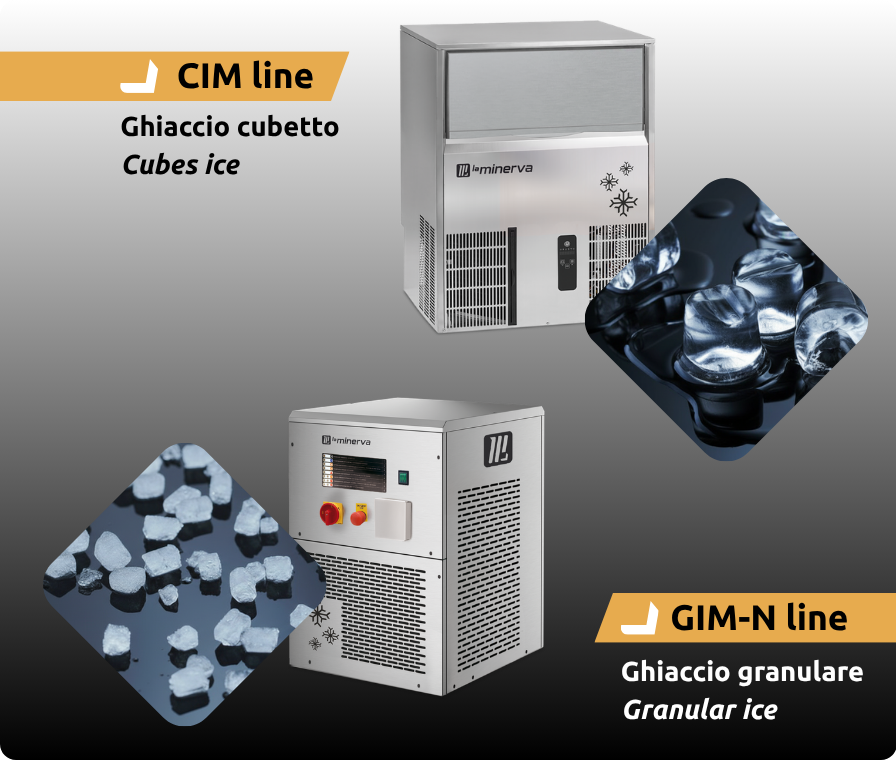
Minerva Omega Group ice makers include several models, each designed for specific professional applications. GIM-N Line granular ice makers produce uniform granules that are easy to mould and distribute, making them particularly suitable for fishmongers, supermarkets, refrigerated counters and food displays.

 Commercial ice makers: a complete buying guide

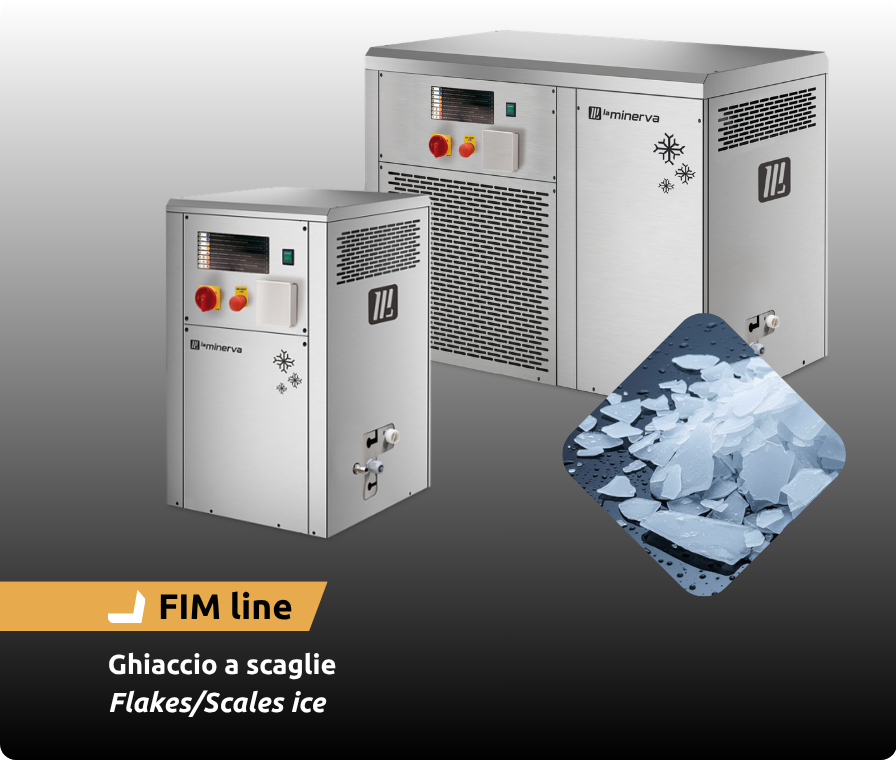
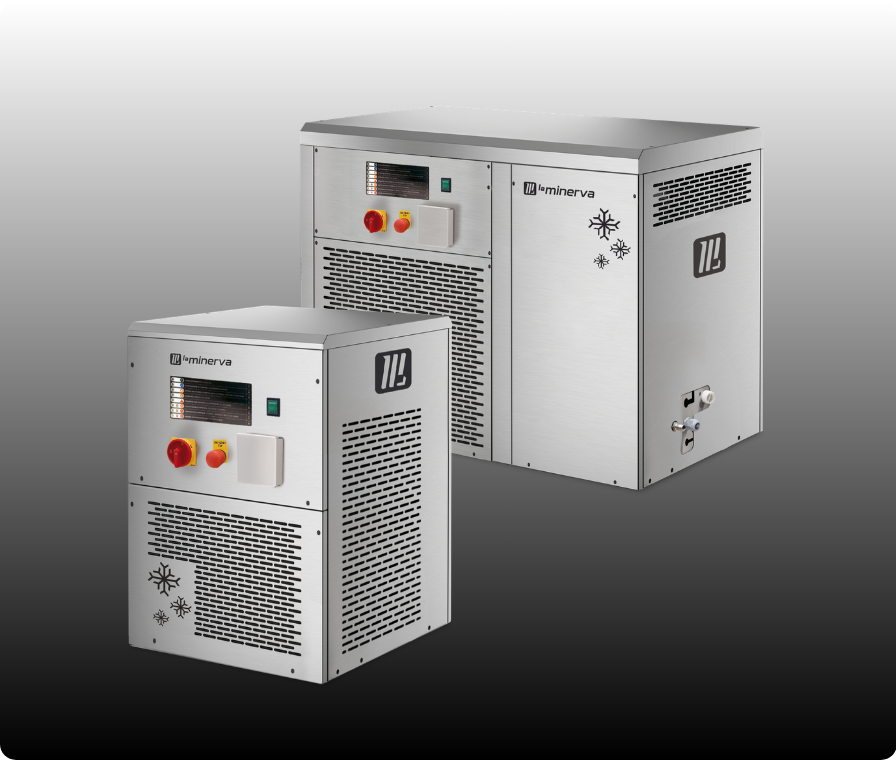
FIM Line flake ice makers, on the other hand, produce thin ice with a large surface area, ideal for food transport, storage and processing. This type of ice maker is mainly used in the food industry, fish and meat processing facilities, bakeries and all businesses that needs to maintain stable temperatures during production processes.


For the HoReCa and beverage sector, we also offer CIM Line of ice cube makers designed to produce solid, clear ice cubes, ideal for bars, hotels, restaurants and catering businesses. The compact structure of the cube ensures effective drink chilling, a key requirement in professional cocktail service and mixology.


Minerva Omega Group professional ice making solutions are available in different power ratings and production capacities, allowing them to adapt to the needs of small businesses, kitchens, food processing labs and large industries. Depending on the operating environment, the ice makers can be equipped with air- or water-cooled condensing systems, helping optimise performance even in very hot environments or where machines are used continuously.


Particular attention is also paid to quality and safety. All ice makers are manufactured with stainless steel structures and materials suitable for food contact, in full compliance with current hygiene, health and safety regulations. Easy-to-clean surfaces and components designed to simplify maintenance also help to maintain high standards of hygiene and long-term reliability.

FAQ - Frequently asked questions about ice makers
 

What is the difference between a domestic and a commercial ice machine?

The main differences are production capacity, operating continuity and the quality of the ice produced. A domestic ice machine is designed for occasional use and small quantities, while an industrial ice maker is built to run continuously, including during peak service times in bars, restaurants and hotels. Commercial machines also offer higher energy efficiency, faster production cycles, more robust components and hygiene standards that meet the requirements of the foodservice and HoReCa sectors.

How much ice should a commercial machine produce?

Production capacity depends on the type of business, the number of customers served and the type of ice required. A small bar or café that mainly uses ice cubes for drinks and cocktails may need between 20 and 50 kg of ice per day, while restaurants, hotels and cocktail bars may require machines capable of producing more than 100 kg in 24 hours.

In food refrigeration applications, ice demand can be significantly higher. Fishmongers, supermarkets, fresh food counters and food production facilities using granular or flake ice for product storage and display may need much greater output, in some cases reaching several hundred kilograms per day. To choose the most suitable commercial ice maker, it is therefore important to consider not only average daily consumption, but also the type of ice used and periods of peak demand during service or food processing.

Should I choose an air-cooled or water-cooled ice machine?

Air-cooled machines are generally more common in the HoReCa sector because they are easier to install and use less water. However, they require good ventilation in order to operate correctly. Water-cooled models, on the other hand, are designed to ensure maximum operating continuity even in very hot or poorly ventilated environments. Although they use more water than air-cooled systems, they are often the most effective solution for intensive use.

What are the most important components in a commercial ice machine?

The key components of a commercial ice machine include the compressor, condenser, evaporator and water filtration system. The compressor manages the refrigeration cycle and has a direct impact on consumption and efficiency; the evaporator determines the quality and uniformity of the ice produced; the condenser ensures heat dissipation; and the filtration system helps improve ice quality and extend the service life of the machine.

How often should a commercial ice maker be serviced?

The frequency of maintenance depends on how intensively the machine is used and on the quality of the water supply. In general, regular checks, cleaning and sanitisation are recommended to prevent the build-up of limescale, bacteria and impurities, which could affect ice quality, energy efficiency and the lifespan of internal components. In the HoReCa and foodservice sectors, proper maintenance is also essential to ensure compliance with hygiene and food safety regulations.

Why choose an F-Gas-compliant ice maker?

The new EU Regulation 2024/573 on fluorinated gases, known as the F-Gas Regulation, is introducing increasingly strict restrictions on the use of refrigerants with a high environmental impact in professional refrigeration equipment. Starting from June 2026, manufacturers of refrigeration systems and ice makers are required to ensure that new machines comply with the requirements set out in the regulation, using refrigerants with a lower climate impact and more energy-efficient technologies.

Choosing a commercial ice maker that already complies with F-Gas standards therefore means investing in a machine that is aligned with the latest regulations and designed to offer greater sustainability, lower energy consumption and reduced environmental impact.

Would you like more information about professional ice makers and the F-Gas compliant solutions? Our team is ready to help you find the most suitable machine for your business needs.