08 May 2026

Professional pizza oven: buying guide

How to choose the best professional pizza oven for your pizzeria or restaurant

Professional pizza oven: buying guide
Would you like more information?

Contact us to schedule an appointment with our experts

Contact us

The purchase of a professional pizza oven is a strategic investment for many food service businesses, from small artisan pizzerias to restaurants that include pizza on their menu, as well as venues with high production volumes. The oven is, in fact, an essential piece of equipment in the pizza preparation process. Not only does it determine temperature stability and cooking time management, but it also affects workflow organisation and other factors that have a direct impact on the quality of the final product. Even cooking and the right level of crispness can only be achieved with a high-quality oven specifically designed to meet precise operational requirements.

The needs of a high-volume pizzeria, for example, are different from those of a restaurant where pizza is offered as a complementary option. For this reason, before choosing a commercial oven, it is important to carefully evaluate several factors, such as production capacity, accuracy in temperature control, energy efficiency, as well as its integration within the workspace. A well-chosen oven will allow you to enhance the quality of your ingredients, ensure high standards, and improve the efficiency of the entire preparation process.

Let’s now take a closer look at the main types of professional pizza ovens, the technical features to consider, and practical advice to help you identify the solution that best suits your business - whether you run a high-volume pizzeria, a restaurant, or a new venture just starting out.

The main types of professional pizza ovens

Pizza ovens are generally divided into three main categories: wood-fired, gas, and electric. Each type has its own construction features, distinct cooking mechanisms, and is suited to specific operational contexts. Understanding the differences between them is the first step towards making an informed choice.

The wood-fired oven is the most traditional option and is valued for its ability to reach extremely high temperatures, allowing for very fast cooking. However, operating a wood-fired pizza oven can be complex: it requires experience to maintain a consistent temperature and flame, involves longer ignition times, and needs a suitable setup, including a dedicated flue and adequate space.

The gas pizza oven is easier to operate than a wood-fired oven and is generally more compact, as well as more efficient in terms of energy consumption and maintenance. It uses a burner that produces continuous, adjustable heat and can still reach high temperatures (up to 450°C). Compared to wood-fired ovens, it allows for easier temperature control, greater stability during service, and quicker start-up times. However, it may present some limitations in terms of heat distribution, which can be less uniform than other solutions. In addition, compared to electric ovens, it typically offers less precise temperature control, requires a flue for the extraction of fumes and combustion gases, and impacts the overall gas power requirements of the venue.

The electric pizza oven is now the most widely used solution in professional pizzerias, thanks to its ease of operation and straightforward installation. Heat is generated by heating elements located both in the upper section (ceiling) and beneath the refractory stone base, reaching temperatures of up to 500°C. It is simple to install and use, requires less maintenance than wood-fired or gas models, and does not need complex flue systems for extracting fumes, making it easy to integrate into a variety of working environments and layouts.

Electric ovens also offer great flexibility. They are available in different sizes and configurations, with one or more independent baking chambers, allowing you to cook anything from a few pizzas to large volumes at the same time. This modularity makes them suitable for small businesses as well as high-output pizzerias, and ideal for more compact settings such as small kitchens or food trucks.

All the advantages of professional electric pizza ovens

Electric pizza ovens are one of the most advanced and versatile solutions for the professional sector, offering a range of benefits that impact both the quality of the final product and overall workflow. As we have seen, their widespread adoption is largely due to their ability to combine high performance, ease of use, and operational versatility. Among the main advantages of professional electric ovens are:

  • Reduced energy consumption: latest-generation electric ovens are designed to optimize energy efficiency, using advanced insulation materials and precise heat control systems. This helps minimise heat loss and reduce overall energy consumption. In addition, the ability to precisely adjust temperature prevents unnecessary waste during operation, allowing for better control of running costs.
  • Ease of use, even for less experienced staff: unlike wood-fired or gas ovens, which require experience to manage flame and temperature effectively, electric ovens are far more intuitive. Their controls allow users to set and maintain cooking parameters quickly and easily, reducing the risk of errors and enabling even operators with limited experience to achieve consistent, high-quality results.
Professional pizza oven: buying guide

  • Versatility: electric ovens are suitable for preparing a wide range of pizza styles, from classic round pizzas to tray-baked and pala pizzas, as well as Neapolitan-style pizzas and high-hydration doughs. The ability to independently adjust the top and bottom heat allows cooking conditions to be tailored to each product - something that is more difficult to achieve with wood-fired or gas ovens, where temperature control is generally more limited.
  • Cooking precision: accurate temperature control is one of the key advantages of electric ovens. Their thermal stability, combined with the ability to set precise values, ensures a uniform cooking. This is particularly important in high-volume professional environments, where maintaining consistent results is essential to guarantee product quality and standardisation.
  • Suitable for baking and pastry: in addition to pizza, electric ovens are ideal for baking bread, focaccia, desserts and pastry products. Their versatility allows you to expand your offering without investing in additional equipment, while also making more efficient use of available space.
  • Modularity and flexible cooking management: electric ovens are designed with a modular structure, featuring one or more independent baking chambers. This makes it possible to cook different products simultaneously, each with its own specific settings. This flexibility is a major advantage for pizzerias and restaurants with varied menus or workflows, as it helps improve organisation and optimise timing.
  • Easy installation with minimal structural requirements: electric ovens can be installed anywhere, as they do not require a flue, combustion extraction systems, or gas connections. This makes them particularly suitable for city-centre venues, smaller spaces, open or integrated kitchens, as well as more specialised environments such as food trucks and dark kitchens. Their ease of installation is also a significant advantage when opening a new business or renovating an existing one.

What features should a professional pizza oven have?

A commercial pizza oven must ensure high performance, reliability, and precise cooking control, while adapting to the real pace and demands of daily operations. Before choosing a professional oven - especially an electric model - it is therefore important to consider a range of technical and construction features that directly affect both the quality of the pizza and the overall efficiency of the preparation and cooking process.

One of the key aspects to consider is the build quality and materials. A well-made oven should be designed to withstand intensive use and ensure long-term durability. In particular, the quality of the refractory stone base is essential for proper heat transfer to the underside of the pizza, while effective insulation helps to maintain stable temperatures and minimise heat loss. The oven should also guarantee consistent and even cooking, distributing heat uniformly throughout the chamber and avoiding temperature variations between different areas. In more advanced electric models, this is further enhanced by the ability to independently control the top and bottom heat, allowing the cooking process to be adjusted according to different production needs.

Control accuracy is another key factor to consider when choosing a professional oven. It should allow precise setting and maintenance of cooking parameters, ensuring stability over time and reliable results - especially during peak service periods. From a practical perspective, ease of installation is also important. Electric ovens offer a clear advantage in this respect, as they do not require a flue or dedicated fume extraction systems, making them easier to integrate into a wide range of environments.

A well-designed oven should also support day-to-day operations, with features such as easy door access, good internal visibility, intuitive controls, and ease of cleaning. All of these elements contribute to smoother workflows and more efficient service. Oven capacity is another crucial aspect and should be assessed based on the specific needs of your business. Electric ovens are available in a wide range of configurations, from compact single-pizza models - ideal for smaller spaces or dedicated workstations - to high-capacity multi-pizza ovens that allow multiple pizzas to be cooked simultaneously. This makes them particularly suitable for pizzerias, bakeries, and restaurants that require high productivity and continuous operation.

How to choose the right oven for your restaurant or pizzeria

Choosing the right oven for your restaurant or pizzeria means identifying the solution that best meets your operational needs, taking into account factors such as production volume, type of products, available space, and workflow.

For high-volume pizzerias, the main requirement is the ability to handle a continuous flow of orders without interruptions. In this case, the most suitable option is a high-capacity electric multi-pizza oven, equipped with one or more large baking chambers. These models allow multiple pizzas to be cooked simultaneously, ensuring consistent results and making it easier to manage peak periods, particularly during evening service or at weekends. The ability to operate across multiple chambers also helps to optimize timing and increase overall productivity.

The needs of a restaurant that includes pizza as part of its menu are quite different. In this case, production volumes are generally lower, and pizza represents only part of the overall offering. A compact or medium-capacity electric oven is therefore a more appropriate choice, providing strong performance without taking up excessive space. Versatility becomes a key advantage: this type of oven can be used not only for pizza, but also for a range of other preparations, helping to optimize kitchen equipment and manage service more efficiently.

Pizzerias with limited space or lower production volumes must find a balance between performance and size. Compact or single-pizza ovens are ideal in these situations: they take up minimal space, are easier to install, and still allow for consistent output, albeit on a smaller scale. They are particularly well suited to small or take-away business, where efficient use of space is essential.

Dedicated stations for preparing gluten-free products are a specific use case. In these environments, using a compact, separate electric oven allows for safe operation by preventing cross-contamination and enabling more controlled management of different preparations. Alternatively, single-pizza ovens can also be used, making them especially suitable for dedicated or low-volume applications. This type of oven can also serve as a support unit for reheating or finishing pre-cooked products, helping to improve overall kitchen efficiency.

For new and growing businesses - such as pizzerias with a varied offering or establishments expecting production to increase over time - it can be useful to choose modular solutions that allow capacity to be expanded by adding additional units. This flexibility makes it possible to adapt the equipment to future growth without the need to replace the oven entirely.

The best professional pizza ovens by Minerva Omega Group

Minerva Omega Group’s professional electric pizza ovens are designed to deliver high performance, robust construction, and maximum operational efficiency in a wide range of settings, including pizzerias, restaurants, delis, and bakeries. Built on extensive experience in the commercial pizza equipment sector, they stand out for their focus on baking quality, precise temperature control, and ease of use - key elements for supporting daily operations in a reliable and efficient way.


La Minerva electric ovens are manufactured using high-quality materials and durable components, ensuring:


  • effective thermal insulation, which maintains a stable temperature inside the baking chamber;
  • intuitive electronic control systems, allowing precise adjustment of the top and bottom heat to suit different types of pizza;
  • precision-ground refractory decks, ensuring even heat distribution and consistent baking across the entire surface of the product;
  • optimised energy consumption, helping to improve efficiency and reduce waste.
Professional pizza oven: buying guide

These features make our ovens ideal not only for traditional pizza baking, but also for flatbreads, baked goods, and a wide range of other preparations.


Our range of electric ovens includes models designed to suit a variety of production needs and operational environments:


  • High-capacity multi-pizza electric ovens, ideal for pizzerias and restaurants with intensive workflows, where consistent performance and uniform cooking are essential even at high output levels.
  • Single-pizza or compact ovens, perfect for smaller businesses, dedicated workstations, or specific applications such as gluten-free pizza, reheating, or cooking individual items.
  • Electric ovens for tray-baked pizza and bread, designed to meet the diverse needs of slice pizzerias, small bakeries, and restaurants, with modular solutions that can be easily combined.

Choosing a Minerva Omega Group electric pizza oven means investing in a solution that combines high performance, uniform cooking results, and efficient energy use - designed to support pizzerias, restaurants, and delis in achieving reliable, high-quality outcomes every day.

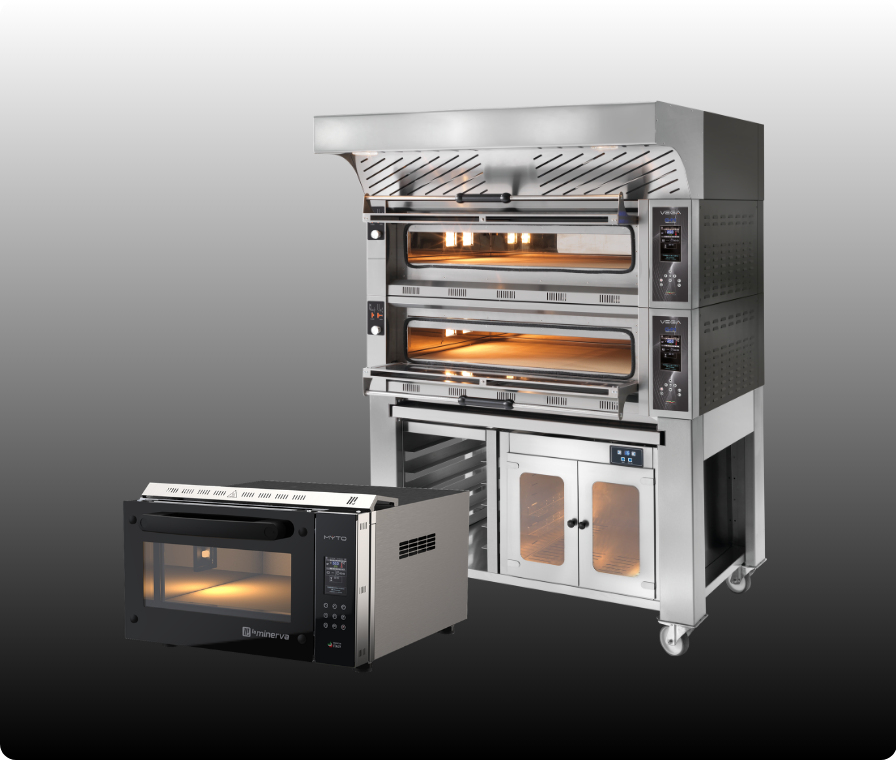
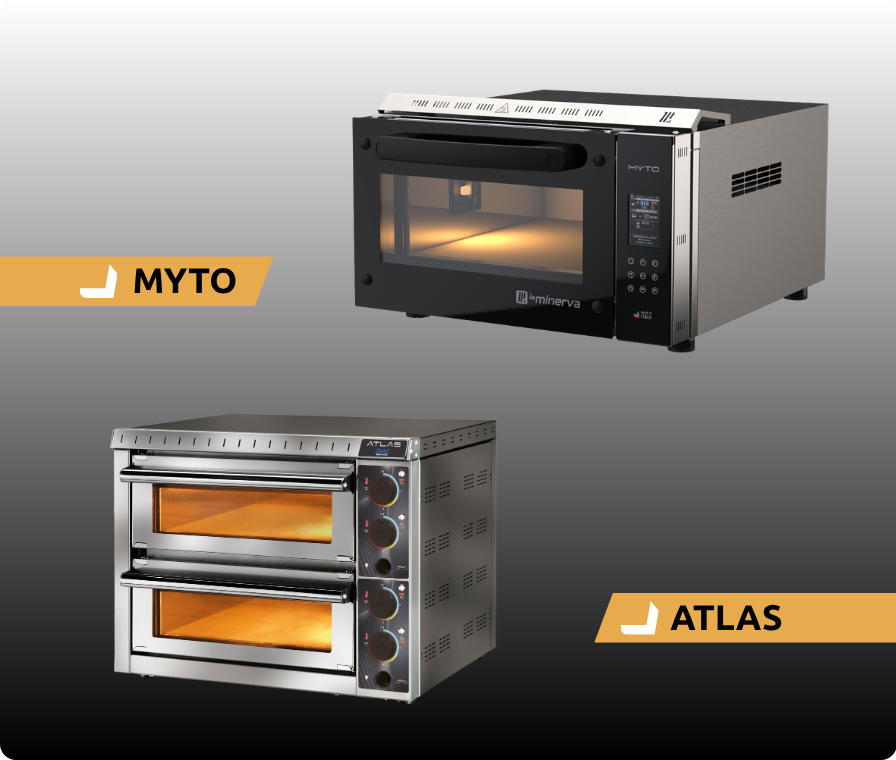
Among the best models in the Minerva Omega Group electric oven range are Vega and Myto, both designed to deliver high performance and consistent cooking quality, even in the most demanding professional environments.


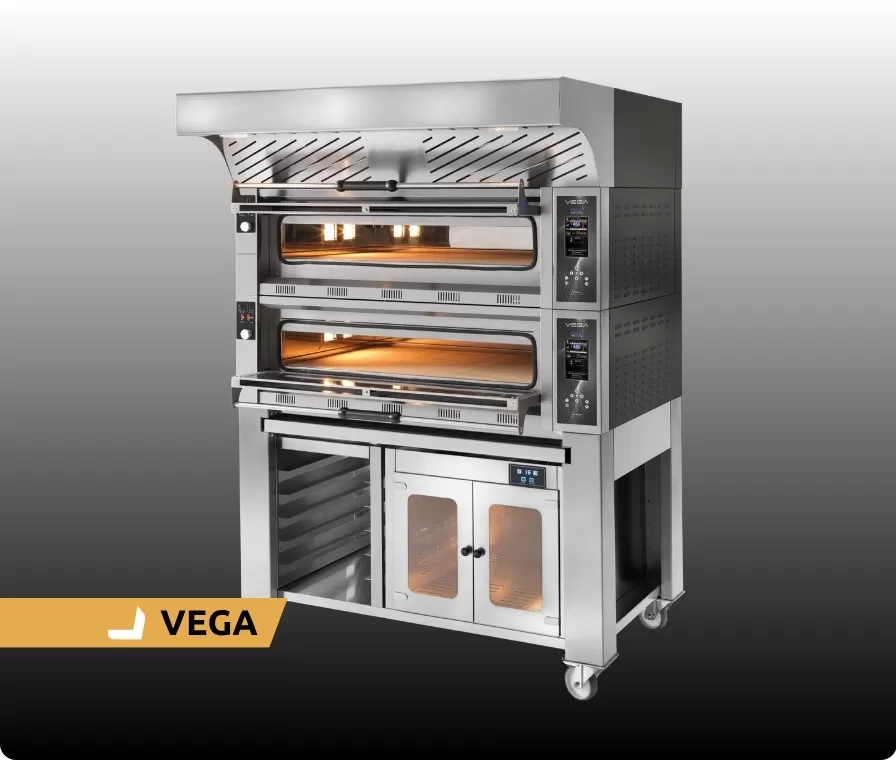
The Vega oven is ideal for pizzerias with high production volumes. Its key feature is the IWOS™ (Italian Wood Oven Substitute) cooking system, which replicates the natural air circulation of a traditional wood-fired oven, ensuring even heat distribution. It can reach temperatures of up to 500°C, making it perfectly suited to Neapolitan pizza. Vega is equipped with an electronic control system that allows independent adjustment of the top and bottom heat, along with a Booster function to speed up preheating and an Economy mode to optimize energy consumption when the oven is not in active use. Its high level of thermal insulation and the practical, compact Plug-In extractor hood, which is easy to install, further enhance both efficiency and ease of use.

Professional pizza oven: buying guide

The Myto oven is a compact yet high-performance solution designed to offer maximum control and professional cooking quality, even in limited spaces. It quickly reaches temperatures of up to 510°C and can cook a pizza in around 90 seconds, delivering an evenly baked result with a well-developed crust. Thanks to the independent control of top and bottom heat, it allows precise management of each stage of the cooking process, adapting easily to different types of pizza - from Neapolitan to Roman, from classic round to tray-baked - as well as bread, cakes, and other baked products. The intuitive digital control panel also enables users to set and save cooking programmes, helping to streamline operations and improve efficiency.


Myto is designed to ensure excellent thermal stability and energy efficiency. Its cooking chamber, equipped with dual heating elements and high-performance seals, provides optimal insulation, while the four-glazed, heat-resistant door helps minimise heat loss and maintain a consistent internal temperature.


The automatic Booster function quickly restores the temperature between batches, reducing downtime and ensuring smooth, continuous operation.

In addition, Myto features an intelligent control system that precisely regulates temperature at every stage of use, enhancing both thermal stability and energy efficiency. This allows for consistently reliable results over time, while making it easy to adjust cooking parameters to suit different operational needs through simple and intuitive controls.

FAQ - Frequently asked questions about commercial pizza ovens


Which oven is best for Neapolitan pizza?

Neapolitan pizza is traditionally cooked in the wood-fired oven which, thanks to its very high temperatures (often exceeding 450°C), allows for rapid cooking and gives the pizza its distinctive flavour and character. For businesses looking to maintain an artisanal and traditional identity, a wood-fired oven remains the most authentic and consistent choice.

However, an electric oven - such as the Vega and Myto models by Minerva Omega Group - can be a highly effective alternative. In addition to reaching high temperatures, advanced electric ovens are equipped with technologies designed to closely replicate the cooking conditions of a wood-fired oven, while offering greater ease of use. This is the case with the IWOS™ System featured in the Vega oven, which reproduces the natural circulation of air typical of a wood-fired oven. Heat generated beneath the refractory stone is channelled upwards and distributed directly onto the pizzas, ensuring even cooking and results comparable to those achieved with traditional wood-fired baking.

The Myto oven is also ideal for preparing Neapolitan pizza thanks to its ability to reach temperatures of up to 510°C in a very short time. The independent adjustment of top and bottom heat allows precise control over every stage of the baking process, adapting the heat distribution to the specific requirements of the dough and ensuring consistent results even during peak service times. The automatic Booster function quickly restores the temperature between baking cycles, maintaining operational continuity and thermal stability - two essential features for authentic Neapolitan-style baking.

From a practical perspective, electric ovens are easier to clean and require less maintenance than wood-fired models. Automatic temperature control also simplifies daily operations, removing the need to constantly manage the fire. In addition, they allow for more efficient energy use - something that is difficult to achieve with a wood-fired oven, which does not rely on advanced control systems.
For these reasons, professional electric ovens represent a highly effective solution for pizzerias and restaurants looking to deliver high-quality Neapolitan pizza, while avoiding the operational complexity of a wood-fired oven.


Which oven should you choose for classic pizza?

Classic pizza is the most common style in Italian pizzerias and, from a cooking perspective, also the most versatile. Unlike Neapolitan or pan pizza, it adapts well to different cooking methods and can be produced successfully in wood-fired, gas, or electric ovens. When choosing an oven for classic pizza, the cooking method therefore becomes less decisive than other practical factors that should be carefully considered. These include the complexity of installation within your premises, the availability of staff with experience in oven operation, the expected production volume, and the overall costs associated with purchase, installation, and long-term use.

Another important aspect is the range of products you intend to offer. If you plan to go beyond classic pizza, wood-fired and gas ovens can quickly show their limitations. A professional electric oven, on the other hand, offers greater versatility, allowing you to work with a variety of doughs as well as certain bakery and pastry preparations. For this reason, it is often the best choice for pizzerias and restaurants looking for maximum flexibility in their menu.


Which oven is ideal for Roman style pizza alla pala?

Roman style pizza alla pala requires careful control throughout the baking process. The dough - typically high in hydration and long-fermented - needs strong, evenly distributed heat to develop properly, resulting in a crisp base and a light, open crumb structure. Unlike Neapolitan pizza, which is cooked in just a few seconds at very high temperatures, pizza alla pala requires longer baking times and a more balanced heat distribution between the base and the top of the oven.

Thanks to the independent adjustment of top and bottom heating elements and the ability to maintain a stable temperature inside the baking chamber, a professional electric oven allows each stage of the baking process to be managed with precision. For this reason, it is the most suitable choice for operators who want to include pizza alla pala in their menu while ensuring consistent, high-quality results.


Which oven is best suited for pan pizza?

Pan pizza requires a more even and prolonged cooking process, quite different from the fast, high-temperature baking typical of Neapolitan pizza. The dough - usually high in hydration and left to rise for longer - needs steady, well-distributed heat to ensure a crisp base without burning the surface or leaving the inside undercooked. An electric oven is the most suitable solution for this type of pizza. Its enclosed baking chamber helps maintain consistent heat, while the independent control of the top and bottom heating elements allows for precise balancing of the heat from below - essential for achieving a properly cooked base - and from above, preventing the toppings from overcooking before the dough is ready.
This level of control is difficult to achieve with a wood-fired oven, where heat distribution is less uniform and requires constant attention, and even more so with a gas oven, which is generally less suited to this type of preparation.


How much does a professional electric pizza oven consume?

Energy consumption is one of the key factors to consider when purchasing a professional electric oven. A well-designed solution, featuring effective thermal insulation and efficient heating elements, is able to maintain operating temperature with minimal energy use, activating only when necessary to compensate for heat loss. This differs from gas or wood-fired ovens, which require a constant flame to remain at temperature.
Latest-generation models also include features such as economy mode, which helps reduce energy consumption during idle periods. While the cost per kilowatt hour may appear higher than gas, a high-quality electric oven guarantees excellent energy efficiency. Combined with lower maintenance requirements and greater ease of use, this can lead to a significant reduction in overall operating costs over time.


Does a professional electric pizza oven require a flue?

No, and this is one of its main advantages. Electric ovens can be installed in any space with an adequate electrical supply, without the need for structural modifications or specific permits related to fume extraction. It is simply necessary to ensure proper ventilation of the room, in line with the regulations applicable to professional kitchens.


Can a professional pizza oven also be used for baking and pastry?

Yes, but only in the case of an electric oven. Wood-fired and gas ovens are generally not suitable for this type of preparation, as uneven heat distribution and the difficulty of maintaining a stable temperature over time make it challenging to achieve optimal results for products that require precise thermal control.

A professional electric oven, on the other hand, allows for independent adjustment of the top and bottom heating elements, making it possible to tailor the baking profile to the specific product. Certain pastry preparations, for example, require lower and more uniform temperatures to ensure even baking without the risk of burning. The enclosed baking chamber also helps to maintain the right level of humidity - an essential factor for the success of many bakery and pastry products.

Do you need more information or expert advice on choosing the right professional oven for your pizzeria or restaurant?