Making a great homemade pizza is all about finding the right balance between ingredients, dough and baking. While the first two largely depend on the quality of the ingredients and how the dough is prepared, the oven can make all the difference to the final result. The temperature it can reach, how quickly it heats up and how evenly it distributes heat are all key to achieving a perfectly baked pizza, with a well-risen crust and just the right level of crispness.
A home pizza oven is designed to reach higher temperatures than a conventional kitchen oven and give you greater control over the baking process. This makes it possible to achieve results similar to those you would expect from a pizzeria, while accommodating different doughs and pizza styles.
Every type of pizza, from Neapolitan and Roman-style pizza to tray-baked, calls for different temperatures and baking requirements. Before buying a pizza oven for your home, it is therefore important to understand which features really make a difference to its performance, including maximum temperature, heat management, preheating time and cooking surface.
In this guide, you will find everything you need to choose the home pizza oven that best suits your needs. We will explore the main types of electric pizza oven, the technical features that affect baking performance and the key factors to consider before buying, helping you achieve pizzeria-quality results at home.
Choosing a home pizza oven is not simply a matter of buying a model that can reach high temperatures. To achieve results similar to those of a pizzeria, you need to consider a number of technical features that directly affect baking quality and the oven’s overall performance. Before buying, there are several key factors worth considering, including:
Ultimately, no single feature determines how good a home pizza oven is. What really matters is the right balance of temperature, heat management, energy efficiency and ease of use, as these factors work together to shape the oven’s overall performance and the quality of the pizza you can achieve at home.
Choosing the right pizza oven for home is not just about the maximum temperature it can reach, but also about the type of pizza you want to make. Each type of dough has its own characteristics and requires different baking conditions.
Neapolitan pizza requires very high temperatures and extremely short baking times. To achieve a well-risen crust, a soft yet perfectly baked base and the characteristic airy texture of the dough, the oven needs to quickly reach temperatures above 450°C quickly and maintain them consistently throughout the baking process. Under these conditions, heat is transferred rapidly to the dough, helping to retain moisture while bringing out the best in the ingredients.
Roman-style pizza, which is generally thinner and crispier, requires a different approach to baking. In this case, precise temperature control becomes particularly important, along with the oven’s ability to distribute heat evenly throughout the baking chamber. Accurate temperature settings help create a crisp, well-baked base while ensuring the toppings are properly cooked.
Tray-baked pizza, on the other hand, has a thicker dough and therefore requires a more gradual baking process than round pizza. To achieve an even bake, the oven needs to maintain a consistent temperature and distribute heat evenly throughout the baking chamber. A sufficiently spacious chamber and precise temperature control both help ensure the best possible results.
If you enjoy experimenting with different recipes, it is worth choosing a versatile oven that can easily adapt to a variety of preparations. The ability to control the heat from the top and bottom of the oven independently, together with customisable programmes, allows you to adjust the settings to suit the dough and the result you want to achieve. This versatility is particularly useful when baking bread, focaccias, cakes and other baked goods.
As we have seen, the oven plays a major role in the quality of homemade pizza. But reaching a high temperature is only part of the equation: to achieve an even bake, heat must also be distributed effectively and remain consistent throughout the process.
This is where an electric pizza oven differs from a conventional oven. Designed specifically for pizza, it makes it easier to reach and maintain the ideal baking conditions, giving you greater control and helping you achieve more consistent results.
The main advantages of a home electric pizza oven over a conventional oven include:
A home electric pizza oven should combine high performance with everyday convenience. As well as delivering an even bake, it should be safe, easy to use and designed to make cleaning and maintenance as straightforward as possible. While these features may not directly affect the quality of your pizza, they can make a significant difference to the overall experience of using the oven.
Ease of use is one of the most important factors to consider. An intuitive interface and clear controls make it quick and easy to adjust the baking settings, so you can start using the oven with confidence from the very first time. Being able to easily control the temperature and baking time, as well as select dedicated programmes, is useful both for those who make pizza occasionally and for enthusiasts who enjoy experimenting with different doughs and recipes.
Safety is equally important. Electric pizza ovens reach extremely high temperatures, so they should be designed to limit heat transfer to external surfaces and ensure safe use in a domestic environment. Specific design features can help reduce the risk of accidental contact with the hottest parts of the oven, making it safer and more comfortable to use throughout the pizza-making process.
Another important consideration is ease of cleaning. After baking, it is perfectly normal for traces of flour, cheese and other ingredients to be left inside the baking chamber. An oven designed with easy cleaning in mind can save time on routine maintenance while helping to preserve its performance, hygiene and baking quality over time. Before buying, it is also worth checking that the oven is compatible with your home electrical supply. A model designed to work with standard domestic electrical systems is easier to install and allows you to get the most out of its performance without having to make changes to your existing electrical system.
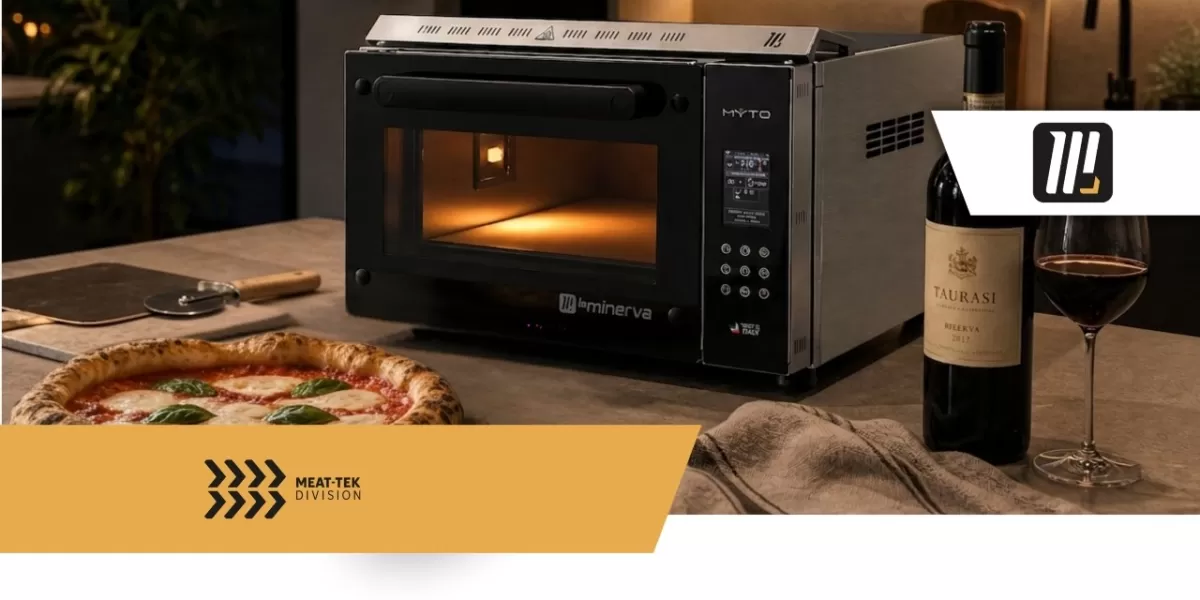
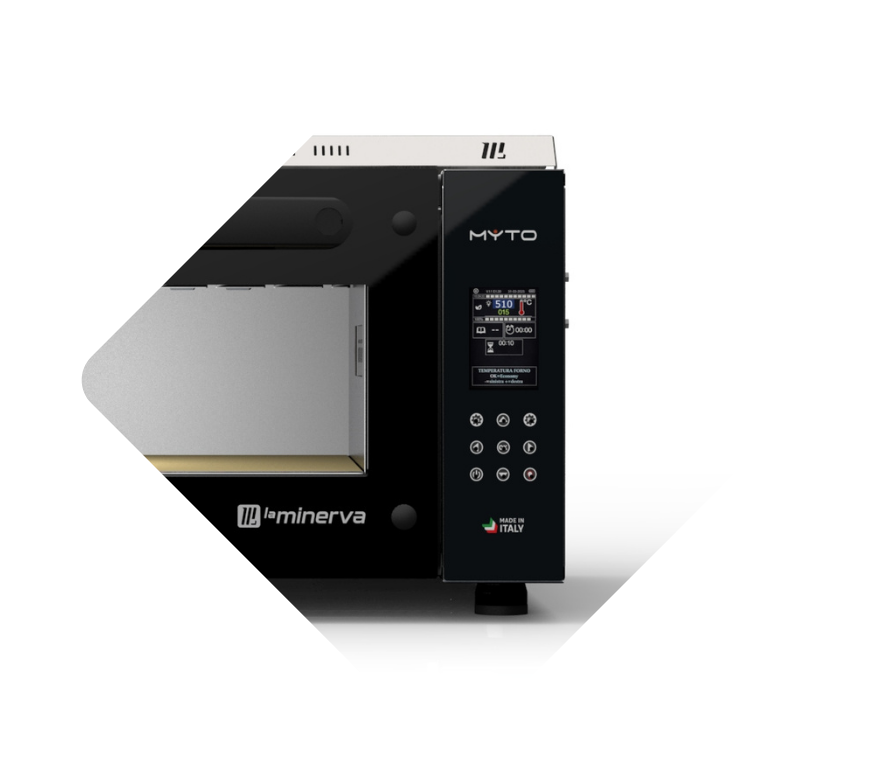
Minerva Omega Group electric pizza ovens draw on the company’s extensive experience in designing professional pizza-making equipment. The range includes solutions developed to meet different needs, from professional kitchens to home use. Every model is designed to deliver precise temperature control, even heat distribution and consistent performance, while catering for different pizza styles and preparation techniques. Among them is MYTO, the new high-temperature electric pizza oven designed to deliver professional-quality results in the home kitchen.
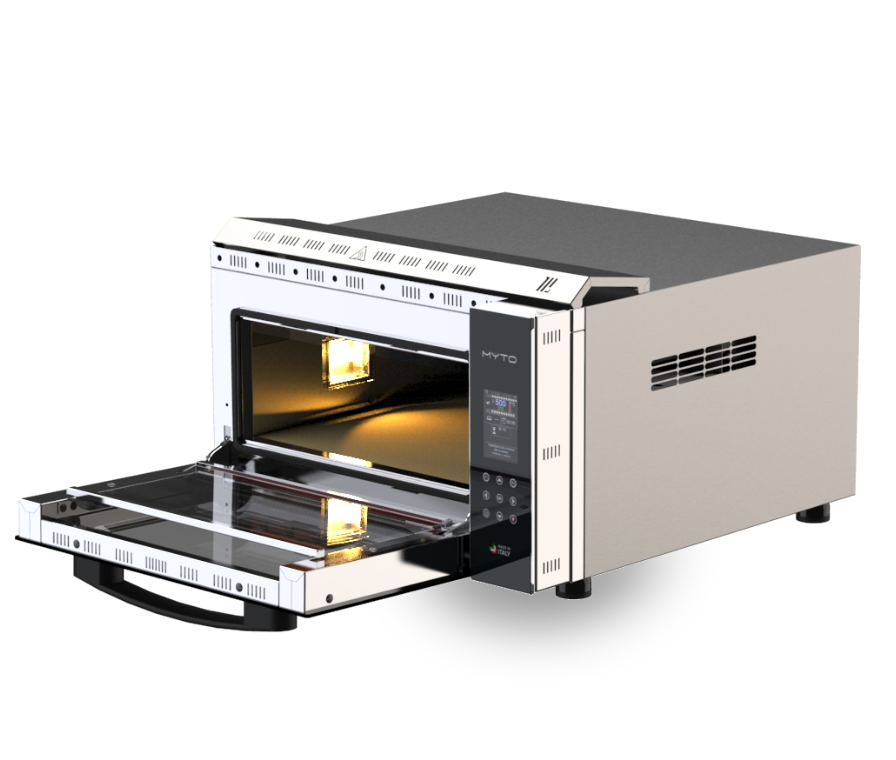
Compact, versatile and easy to use, MYTO is designed to support every stage of pizza making, from preparing the dough through to baking. It can be used to make Neapolitan pizza, Roman-style pizza and tray-baked pizza, as well as bread, cakes and viennoiserie, making it suitable for a wide range of recipes and baking styles.
With the ability to reach 510°C in around 30 minutes and bake a Neapolitan pizza in just 90 seconds, MYTO delivers results that bring out the best in the dough, ingredients and preparation technique. Its 14 cm-high baking chamber, equipped with dual heating elements and a cordierite baking stone, ensures even heat distribution. For those looking to recreate the most authentic Neapolitan tradition, a Sorrento biscotto stone is also available as an optional extra.
The main advantages of MYTO include:
With these features, MYTO offers a complete solution for anyone looking for a professional electric pizza oven for home use, combining advanced technology, ease of use and high performance to deliver a pizzeria-quality baking experience in your own home.
There is no single home pizza oven that is best for everyone. The right model depends on the type of pizza you want to make and how often you plan to use it. A good home pizza oven should be able to reach high temperatures, distribute heat evenly, maintain a stable temperature throughout the baking process and provide precise control over the settings. Safety, ease of use, energy consumption and ease of cleaning are also important factors to consider when choosing an oven.
The right choice depends on how you plan to use the oven. The size of the baking chamber should be suitable for the pizzas you want to make, while the power rating should allow the oven to reach the required temperature quickly without compromising compatibility with your home electrical supply. Energy efficiency is another important consideration and depends on factors such as insulation, the quality of the materials and intelligent temperature management systems, which can help minimise heat loss and optimise energy consumption.
To find the right oven for your needs, consider the type of pizza you make most often, the space you have available and how frequently you plan to use it. As well as baking performance, it is worth looking at how easy the controls are to use, how safely the oven operates, how straightforward it is to clean and whether it can be connected to a standard domestic electrical supply.
To make Neapolitan pizza at home, it is best to choose an oven that can reach very high temperatures and maintain them consistently throughout the bake. The MYTO electric pizza oven was designed with exactly this in mind: it reaches 510°C, can bake a Neapolitan pizza in around 90 seconds and provides precise temperature control thanks to its PID system. An optional Sorrento biscotto stone is also available for those looking to achieve a bake that is even closer to the Neapolitan tradition, making MYTO an ideal choice for achieving professional-quality results at home.
Energy consumption depends on the oven’s power rating, thermal insulation and the technology used to manage temperature. An efficiently designed oven can minimise heat loss and maintain a stable temperature, helping to reduce unnecessary energy consumption. Models such as MYTO feature a PID control system that helps optimise temperature management and are designed to work with standard 3 kW domestic electricity supply, offering a good balance between performance and energy consumption.
Temperature is one of the most important factors affecting the quality of your pizza, as different styles require different baking conditions. Neapolitan pizza needs very high temperatures, generally between 450 and 500°C, to achieve a well-risen crust and a very short baking time. Roman-style and tray-baked pizzas, on the other hand, can be baked at lower temperatures and require longer baking times. For this reason, it is worth choosing a home pizza oven that can not only reach high temperatures, but also maintain them consistently throughout the baking process, helping you achieve even, reliable results.
Yes. Although primarily designed for baking pizza, an electric pizza oven can also be used for a wide range of other recipes. Precise control over temperature and baking times makes it suitable for bread, focaccia, tray-baked pizza, cakes, pastries and other baked goods. How versatile the oven is will depend on the features of the model and the ability to customise its baking settings to suit different recipes.
Need help choosing the right pizza oven?
Different baking needs call for different features. That is why Minerva Omega Group offers a complete range of electric pizza ovens, designed to meet the needs of both professionals and home pizza enthusiasts looking for high-quality results.
Would you like to find out more about MYTO or receive personalised advice?